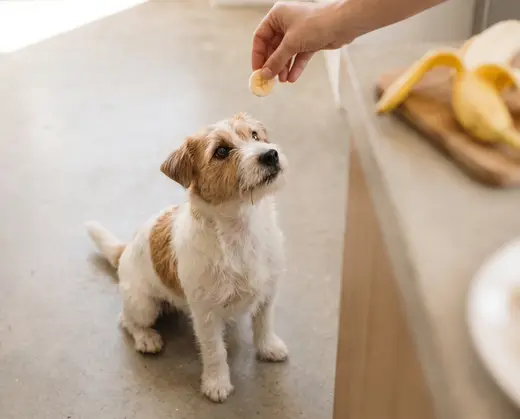
Are apples good for dogs?
Apples are one of the easiest fruits to share with a dog. They're crunchy, low in fat and full of water. They also contain fibre, vitamin C and small amounts of other vitamins and antioxidants.
Your dog doesn't need apples, though. A complete dog food already contains everything it needs, and dogs make their own vitamin C. The real benefit is that apple is a low-fat, low-calorie swap for richer treats. Many dogs also enjoy the crunch.
What's in an apple
| One medium apple (about 180 g) | Amount |
|---|---|
| Calories | about 95 |
| Natural sugar | about 19 g |
| Fibre | about 4 g |
| Water | about 85% |
The sugar is the main reason to keep portions small. It's natural fruit sugar, but a whole apple is a lot for most dogs.
Remove the core, seeds and stem
This is the one rule that matters most.
- Seeds: apple seeds contain amygdalin, a compound that can release cyanide when the seeds are crushed or chewed. A few swallowed seeds are very unlikely to poison a dog, but there's no reason to take the risk. Remove them.
- Core: the core is tough and fibrous. It can be a choking hazard, and in small dogs it can cause a blockage in the gut.
- Stem and leaves: these also contain cyanide compounds and have no benefit. Throw them away.
The easiest way is to cut the apple into quarters, slice out the core and seeds, then cut the flesh into thin slices or small cubes.
If your dog swallowed a whole core or a large chunk and starts vomiting, strains to poo, seems in pain or stops eating, call your vet.
How much apple can my dog eat?
Vets often follow the 10% rule: treats, including fruit, should make up no more than about 10% of your dog's daily calories.
Here's how that works out. A 10 kg dog eats roughly 500 calories a day, so its whole treat allowance is about 50 calories. That's about half a medium apple. But the allowance has to cover every other chew, biscuit and training reward too. That's why the guide below is deliberately smaller.
| Dog size | Rough portion of apple |
|---|---|
| Toy (up to 5 kg) | 1 to 2 thin slices |
| Small (5 to 10 kg) | 2 to 3 thin slices |
| Medium (10 to 25 kg) | 3 to 5 slices |
| Large (25 kg and up) | up to a quarter of an apple |
A "slice" here means about one eighth of a medium apple. Start with less the first time and check how your dog's stomach handles it.
My dog ate apple seeds. What should I do?
Don't panic. The seeds from one apple are very unlikely to poison a dog, because the amount of amygdalin is small and many seeds pass through whole. The bigger worry is usually the core, especially for a small dog.
Watch your dog over the next day or two. Call your vet if you see vomiting, belly pain, straining to poo or loss of appetite. Call straight away if your dog ate a large number of seeds, for example from a bag of cores or a juicing bin, or if it shows red gums, trouble breathing or collapse.
Can apples clean a dog's teeth?
You'll often read that crunchy apple slices help clean teeth. Some gentle scraping may happen while your dog chews, but the evidence for any real dental benefit is limited, and the sugar in fruit is no friend to teeth either. Apples are a nice treat, not a dental plan. Brushing and dental chews your vet recommends do far more.
Risks to watch for
- Upset stomach: too much apple can cause diarrhoea or gas, because of the fibre and sugar.
- Choking: cut apple into pieces that suit your dog's size, especially for small dogs and fast eaters.
- Sugar: if your dog has diabetes or is overweight, ask your vet before adding fruit.
- Fallen apples: windfall apples in the garden can rot and ferment, which may upset your dog's stomach. Pick them up regularly.
Apple foods to skip
Fresh, plain apple is the safe version. Many apple products are not:
- Apple pie, crumble and cake: high in sugar and fat, and often made with raisins, which are toxic to dogs. Large amounts of nutmeg are also a concern.
- Apple sauce: many brands contain added sugar. "Sugar-free" versions may contain xylitol, a sweetener that is very dangerous for dogs. Only plain, unsweetened apple sauce with no added ingredients is OK, and only a spoonful.
- Apple juice: concentrated sugar without the fibre. Water is better.
- Toffee apples and caramel apples: sugary, sticky and often on a stick.
- Cider: alcohol is dangerous for dogs.
Easy ways to serve apples
- Thin slices as a crunchy snack, core and seeds removed.
- Small cubes as low-calorie training rewards.
- Frozen pieces on a hot day.
- Grated into a lick mat with plain, unsweetened yogurt.
- Homemade biscuits: grated apple, oats and xylitol-free peanut butter, baked into small bites.
Other fruit dogs can eat
Bananas, blueberries, seedless watermelon without the rind, strawberries and pears are all fine in small amounts. Grapes and raisins never are. Check any other food in the Dog Food Checker.
FAQ
Can dogs eat apple skin?
Yes. The skin is safe and holds much of the fibre. Wash the apple first, and peel it for dogs with sensitive stomachs.
My dog ate an apple core. Should I worry?
One core is unlikely to cause poisoning, but it can be a choking or blockage risk, especially for small dogs. Watch for vomiting, belly pain, constipation or loss of appetite, and call your vet if you see any.
Can puppies eat apples?
Yes, a small, thin slice is fine for most puppies. Cut it small enough to avoid choking and introduce it slowly.
Are green and red apples both safe?
Yes. Every common variety is fine for dogs once the core, seeds and stem are removed.
Can dogs eat dried apple?
Plain dried apple is safe in very small amounts, but drying concentrates the sugar. Avoid dried apple with added sugar, sulphites or coatings.
This article is general information, not a replacement for advice from your vet.