Why grapes are dangerous for dogs
For decades vets knew grapes poisoned dogs but couldn't say why. In 2021, vets at the ASPCA Animal Poison Control Center linked it to tartaric acid, a natural compound in grapes. The clue came from an unexpected place: dogs that ate homemade playdough made with cream of tartar (which is tartaric acid) developed the same kidney problems as dogs that ate grapes. Dogs seem unable to process it the way humans can, and it damages the kidneys.
The problem is that the effect is unpredictable. Some dogs eat a few grapes with no visible effect, while others develop kidney failure after just one or two. The amount of tartaric acid varies from grape to grape and from bunch to bunch, and dogs vary in how sensitive they are. Because you can't know which kind of dog you have, or which kind of grape it ate, vets treat any amount as an emergency.
Raisins, sultanas and dried currants are even riskier, because drying concentrates the toxin into a smaller, sweeter bite that dogs love.
Where grapes hide
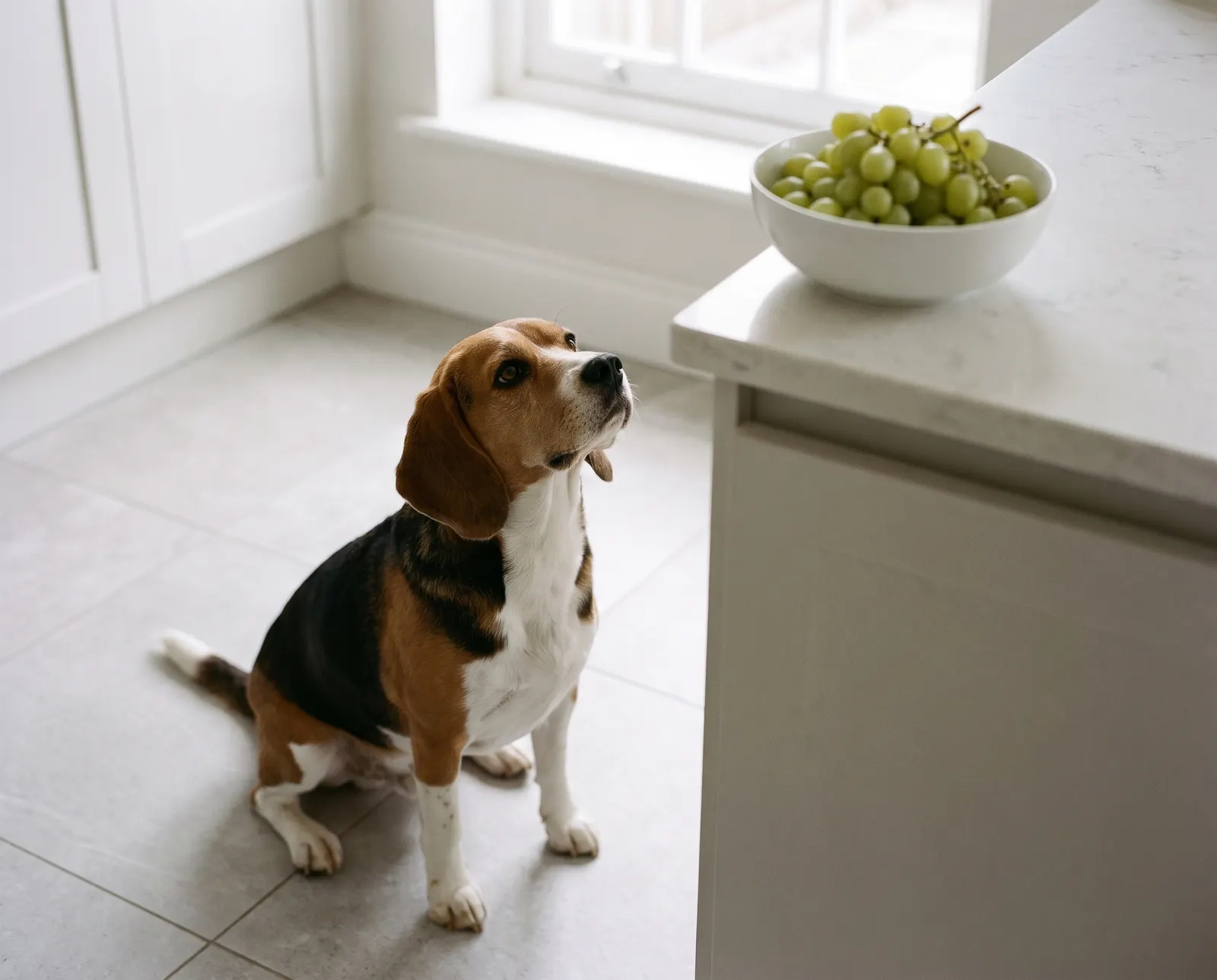
The bowl of grapes on the table is the obvious danger. These are the ones owners miss:
| Food | Why it's risky |
|---|---|
| Raisins, sultanas, dried currants | Dried grapes. The most concentrated form |
| Fruit cake, Christmas pudding, mince pies | Packed with dried fruit |
| Hot cross buns, raisin bread, scones | A few raisins in every slice |
| Trail mix and cereal bars | Raisins mixed in with nuts and oats |
| Grape juice and grape jelly | Made from the fruit itself |
| Homemade playdough | Often made with cream of tartar |
Symptoms of grape poisoning
Signs usually start within 6 to 24 hours:
- Vomiting, often with pieces of grape in it
- Diarrhoea
- Lethargy and weakness
- Loss of appetite
- Belly pain (your dog may hunch or not want to be touched)
- Drinking and peeing more at first, then peeing less or not at all, a sign the kidneys are failing
Kidney damage can develop over 24 to 72 hours, so a dog that looks fine at first can still be in danger.
What happens after a dog eats grapes
Hours since eating. Treatment works best before any signs appear.
Show as a table
| Hours | What happens |
|---|---|
| 0–4 | Best window for your vet to make your dog vomit and give charcoal |
| 6–24 | Vomiting, diarrhoea, tiredness, loss of appetite |
| 24–72 | Kidney damage can develop, even in dogs that seemed fine |
My dog ate grapes. What should I do?
Treatment works best in the first few hours, before the toxin is absorbed.
- Call your vet or an emergency vet. In the US you can also call the ASPCA Animal Poison Control Center at (888) 426-4435 (a fee may apply). In the UK, your vet can contact the Veterinary Poisons Information Service.
- Don't make your dog vomit at home unless a vet tells you to. Salt and some other methods found online are dangerous on their own.
- Tell the vet how many grapes or raisins, when, and your dog's weight. If you can, bring the packaging.
- Pick up what's left so nobody else in the house gets a second helping.
What the vet will do
If your dog ate grapes recently, the vet will usually make it vomit with a safe injection, then give activated charcoal to soak up what's left in the gut. Depending on the amount and the time, they may put your dog on intravenous fluids for around 48 hours to protect the kidneys, with blood tests to check kidney values before, during and after.
It can feel like a lot for "just a few grapes". It's done because once the kidneys stop working, treatment becomes much harder, longer and more expensive. Dogs treated early usually recover well.
How to grape-proof your home
- Keep fruit bowls, lunch boxes and shopping bags out of reach, not just "pushed back on the counter".
- Tell children and guests: no grapes or raisins for the dog, not even one.
- Watch the floor at parties and holidays, when cakes and trail mix are everywhere.
- Store dried fruit in a closed cupboard, not on an open shelf.
Safe fruit your dog can eat instead
- Blueberries: small, low in calories, great as training treats
- Apple slices: without the core and seeds
- Banana: in small pieces, as an occasional treat
- Watermelon: seedless and without the rind
Not sure about another food? Try the Dog Food Checker.
FAQ
Can one grape kill a dog?
It can cause kidney failure in some dogs, and there's no proven safe amount. Treat even one grape as a reason to call your vet.
Are green, red and seedless grapes all toxic?
Yes. Every grape type and colour is dangerous, with or without seeds, peeled or not, organic or not.
Is grape jelly or grape juice dangerous?
Yes. Grape products can contain the same toxin, so keep them away from your dog.
My dog ate grapes yesterday and seems fine. Am I in the clear?
Not necessarily. Kidney problems can take up to three days to show. Call your vet; they may want to run a blood test.
Can cats eat grapes?
Cats rarely eat them, but the same advice applies: keep grapes and raisins away and call your vet if your cat eats any.
Are wine and grape-flavoured sweets dangerous too?
Wine is dangerous because of the alcohol alone. Grape-flavoured sweets usually contain no real grape, but many contain xylitol or lots of sugar, so they are still a bad idea.
This article is general information, not a replacement for advice from your vet.