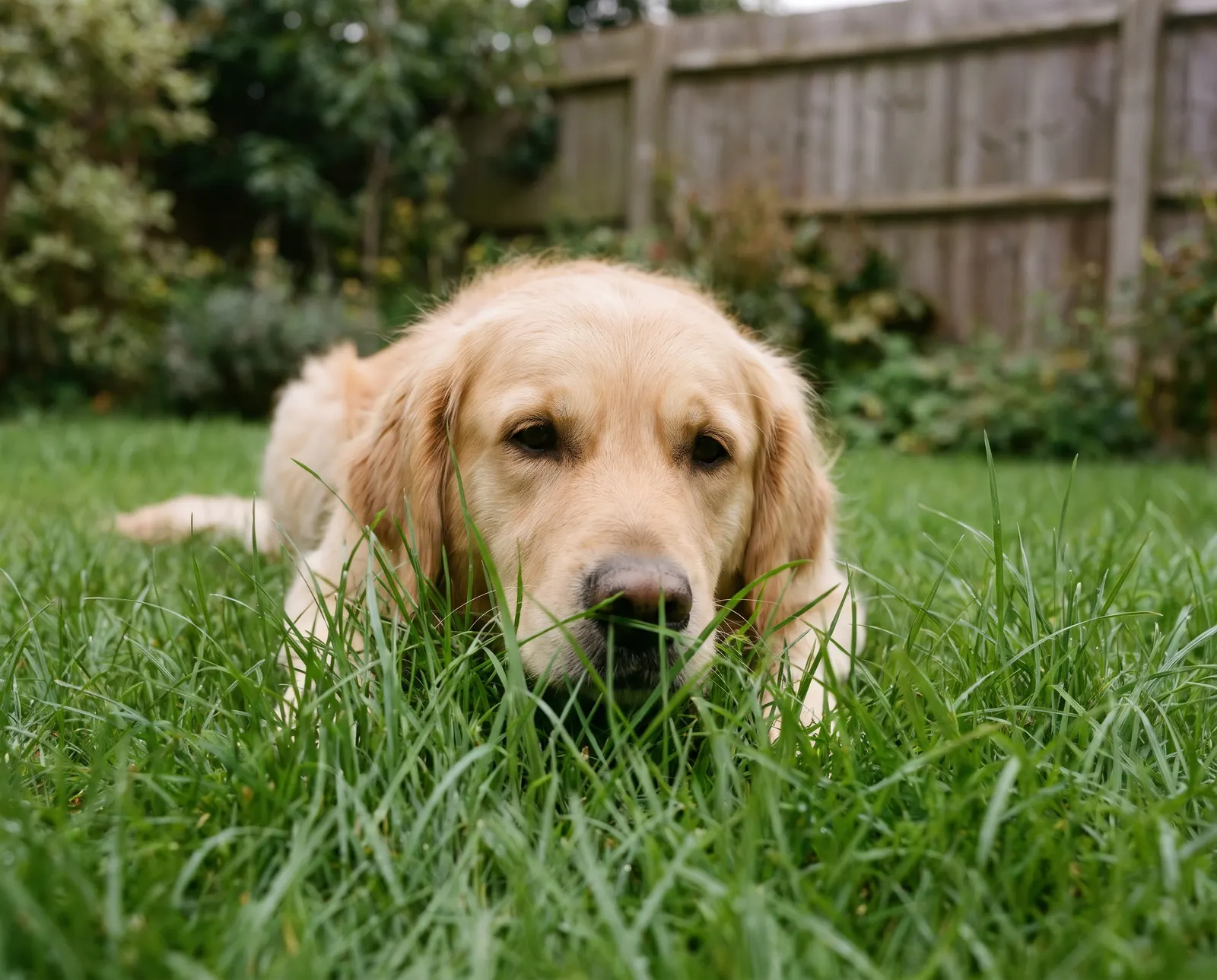
How common is it?
Very. In a well-known survey by researchers at the University of California, Davis, about 8 in 10 owners whose dogs had access to plants said their dog ate them. Only a small share of those dogs seemed unwell beforehand, and most did not vomit afterwards. So the old idea that dogs eat grass because they feel sick doesn't hold up for most dogs.
Do dogs eat grass because they feel sick?
Mostly not. What owners reported in a University of California, Davis survey.
The same researchers noticed that younger dogs ate plants more often than older ones, which fits with grass-eating being an ordinary, exploratory behaviour rather than a sign of illness.
5 likely reasons
- They like it. Fresh spring grass is tender and juicy, and some dogs just enjoy the taste and the crunch. Many dogs are picky: they'll walk past one patch to graze a particular type.
- Boredom. Dogs without enough exercise or play may graze to pass the time, especially young, energetic dogs left in a garden.
- Instinct. Wild relatives such as wolves eat some plant material, and wild canids have been seen eating grass too. It may simply be part of being a dog.
- Fibre. Some vets think a diet low in fibre may make some dogs seek out plants. Some owners report that a higher-fibre food reduces grazing.
- An upset stomach (sometimes). A minority of dogs eat grass quickly and in big mouthfuls when they feel unwell, and then vomit.
Calm grazing vs. frantic gulping
How your dog eats grass tells you a lot. A dog that wanders, sniffs, and nibbles a few blades is almost always just grazing. A dog that rushes outside, gulps big mouthfuls without chewing and then vomits is more likely to feel sick, especially if it happens often.
When to see a vet
Call your vet if your dog:
- Vomits often after eating grass, or vomits blood
- Has diarrhoea, blood in the stool or weight loss
- Suddenly starts eating grass or other non-food things much more than before
- Seems tired, has no appetite or has a painful belly
- Eats soil, stones or fabric as well as grass
These can point to a gut problem, parasites or another illness that needs a check-up.
Is eating grass dangerous?
The grass itself is rarely the problem. The real risks are:
- Pesticides and fertilisers on lawns, parks and roadsides
- Toxic plants growing among the grass, such as foxglove, lily of the valley, azaleas, oleander or wild mushrooms
- Parasites from grass contaminated with other animals' poop, and in some areas lungworm, which dogs can pick up from slugs and snails
- Grass awns (sharp seed heads) that can get stuck in the throat, nose, ears or paws
If you're unsure about a plant, the ASPCA keeps a searchable list of plants that are toxic to dogs.
How to reduce grass eating
- More exercise and play: longer walks, fetch, and sniff walks where your dog leads.
- Puzzle toys and chews for alone time.
- Ask your vet about fibre, for example a food with more fibre or a vet-approved supplement.
- Grow pet grass indoors, such as wheatgrass or oat grass, so your dog has a safe, clean option.
- Use the "leave it" command on walks, rewarded with a treat.
FAQ
Should I stop my dog from eating grass?
Not if it's occasional and from untreated grass. Do stop it near treated lawns, roadsides or unknown plants.
Why does my dog eat grass and then throw up?
Some dogs that already feel nauseous eat grass quickly, and it can trigger vomiting. If it happens often, see your vet.
Is it normal for puppies to eat grass?
Yes, puppies explore with their mouths. Teach "leave it" early and watch for toxic plants.
Does eating grass mean my dog has worms?
Not on its own. But worms can cause other signs like weight loss or a bloated belly, so keep up with regular worming and ask your vet if you're unsure.
Can grass make my dog sick?
Clean grass rarely does. Pesticides, fertilisers, toxic plants and grass seeds are the real risks.